
Article
Don’t See Straight Through the House: A Simple Condo Entryway That Turns Before You Enter
Many Malaysian condos look straight from the front door to the balcony. A side-wall screen or cabinet can turn the path, with warm light, a door mat and a plant.
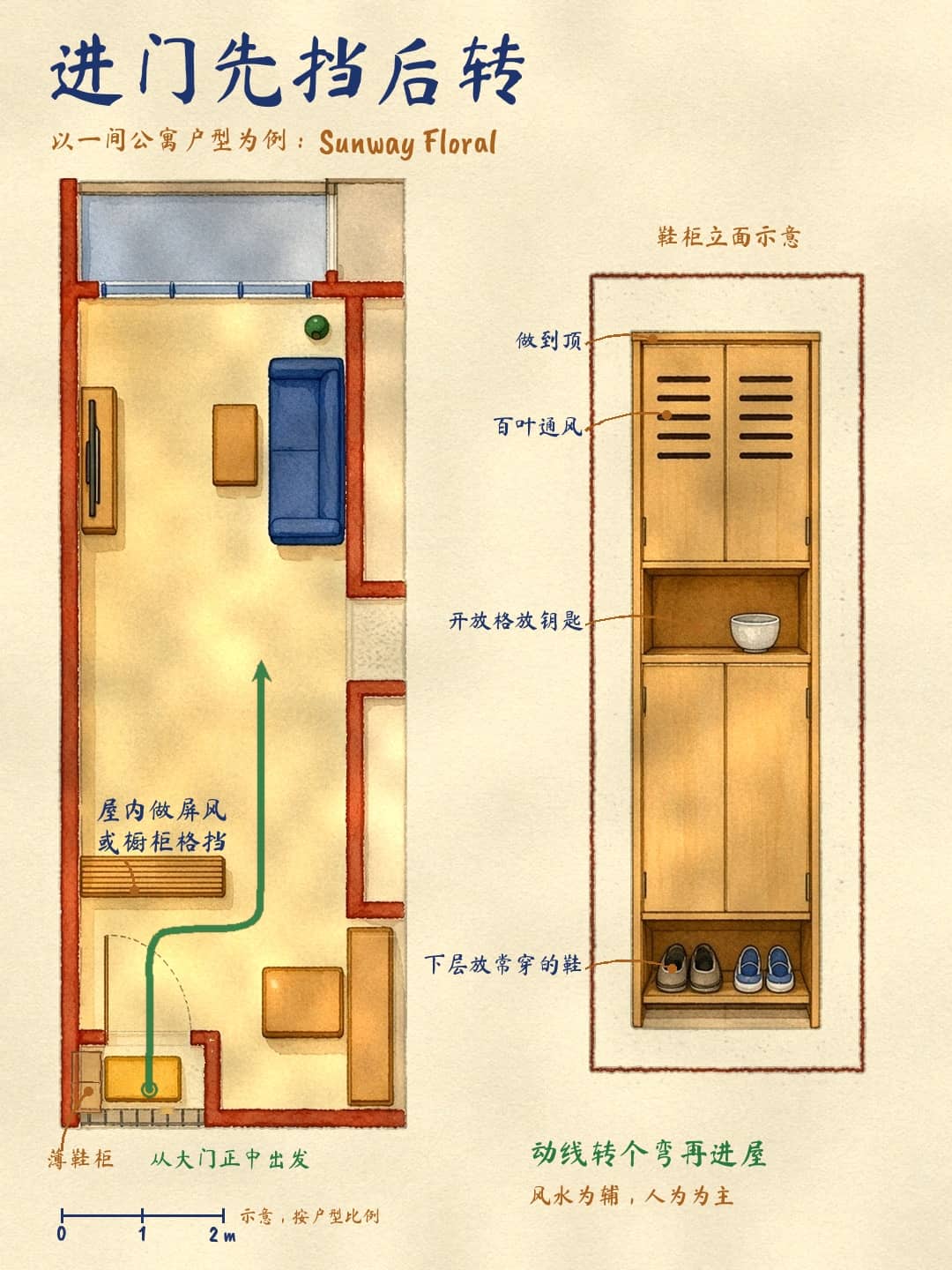
When people talk about feng shui at the front door, the conversation often jumps to crystals or a bagua mirror. In a Malaysian condo, those rarely fix the real problem. What helps is the path you walk, and a bit of properly planned storage.
Feng shui, as we see it, is a way to make a home more comfortable to live in. How you use the space, and how you keep it, still matters more. In short: feng shui helps, but the people in the house come first.
The plans in this article are drawn to scale from a real condo layout (Sunway Floral). The front door opens onto a long living-and-dining strip, and the entry itself is only a small recess. You can use the same idea in another unit; you do not need to buy a collection of ornaments first.
What the entryway is for
The entryway is the short buffer between the front door and the living room.
It gives you a place to pause — to take off your shoes, put down your keys — and it stops the view, the air and the foot traffic from shooting straight to the far end of the house. The usual way to describe this in feng shui is simple: block first, then turn, and only then walk in.
In everyday language: you should not see right through the whole home the moment you open the door.
A few things worth checking
You do not need a list of formulas. Open your own door and look:
- Turn before you enter. The first thing you see should be a wall, a screen or a cabinet, not the far window or the back of the house.
- Keep it bright and tidy. This is the first impression for everyone who comes home. Shoes and parcels should not sit in the walkway.
- Give yourself storage, and let the door open fully. A shoe cabinet that actually holds what you own is more useful than any display object. Nothing behind the door should stop it from opening all the way.
- Keep it fresh. A ventilated cabinet and a clean floor do more for the feeling of the house than a crowded shelf of decorations.
When you can see right through
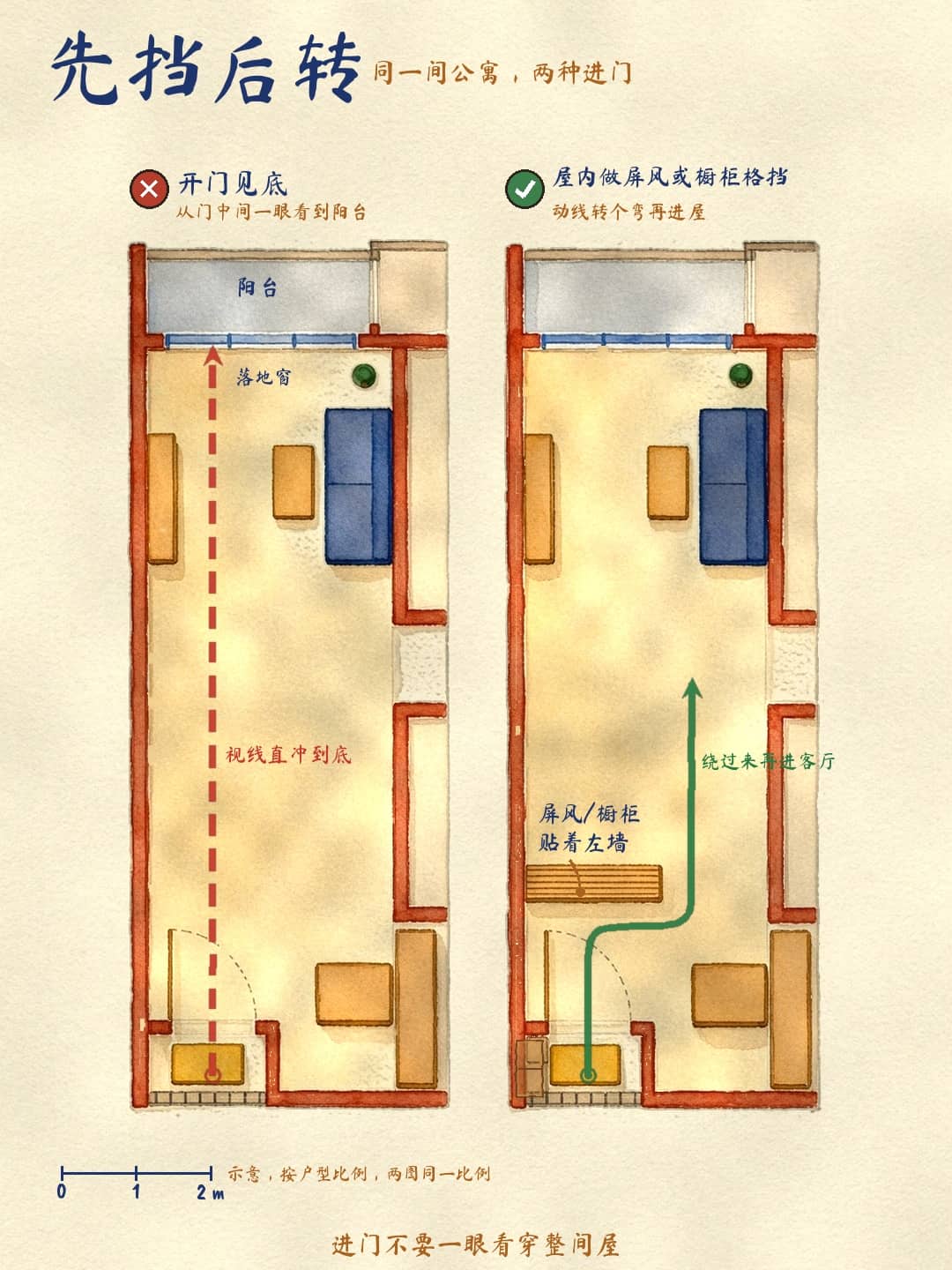
In many condos, the living hall is a long, narrow strip. Open the front door, and your eye travels down that strip and out through the balcony sliding door. People often call this “seeing the end of the house as soon as you enter.” In feng shui terms, the concern is that the air and the view rush straight through, and the room never quite feels held.
The usual fix is not to block the middle of the room. Build a screen or a cabinet partition attached to the left wall, just inside the door. Let it come out far enough to break the sightline from the centre of the door, and leave a clear gap at the other end so you can walk around it into the living room. You arrive, you see the screen, and you turn.
A slim, floor-to-ceiling shoe cabinet can sit against the wall in the entry itself — about 30 to 35 cm deep is usually enough — kept clear of the door swing.
The same idea applies if you live in a terrace house where the front and back doors line up, or if the door faces a kitchen, a bathroom or a staircase: break the straight view, then turn. This article stays with the condo entrance; those other layouts can wait for their own drawings.
Light, a door mat, a plant, and colour
Once the path is right, the first glance can be made more comfortable without much fuss.
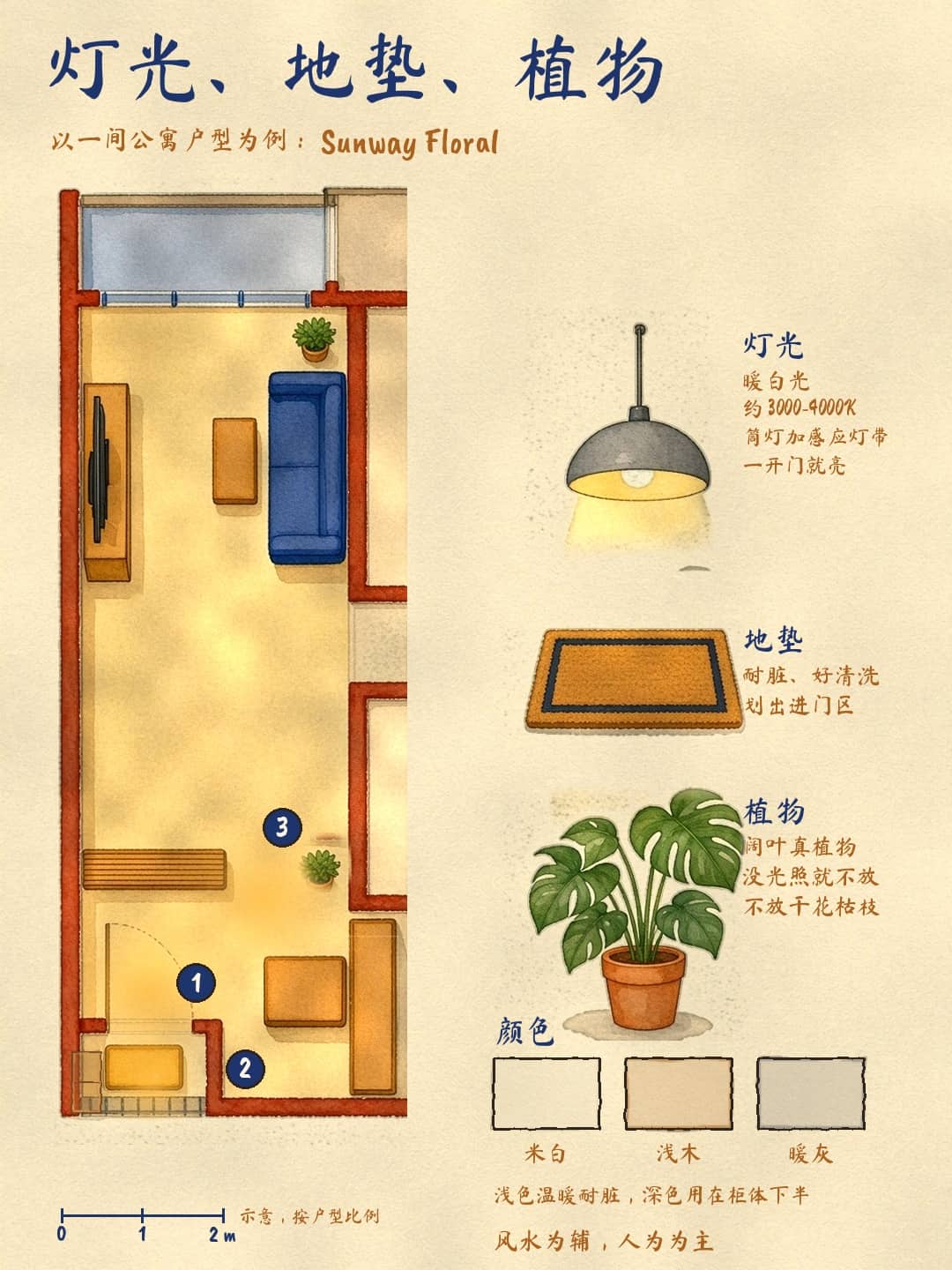
Lighting. Use a warm white (around 3000–4000K). A downlight plus a sensor strip that comes on as the door opens is especially helpful when you come home after dark.
Door mat. Lay a hard-wearing, easy-to-wash mat just inside the door. It marks the entry zone and catches dust. When it is worn or dirty, replace it.
Plants. A leafy real plant, such as a monstera, works well if you can keep it healthy. If the entry gets no real daylight, take it out to the balcony now and then, or skip the plant altogether. Dried flowers and dying leaves make the corner feel tired.
Colour. Stay with light, warm, practical shades — off-white, light wood, warm grey. Darker tones can go on the lower cabinets, where scuffs show less. These are design choices for comfort, not strict rules.
If you want a mirror, put it on a side wall or on the inside of a cabinet door, not directly opposite the front door. That is a common household preference, not a hard rule. It is also simply nicer not to be startled by your own reflection when you walk in.
A last word
An old line put it this way: when the land is good, the seedlings grow; when the house feels right, the people in it thrive.
In plain terms: a comfortable home supports the life you live in it. Feng shui can improve the conditions. It does not decide your fortune.
Every house faces a different direction. If you would like a closer look, send us your floor plan — we are happy to review it at no charge.
B&G Building Solution Selangor, Seri Kembangan Interior design, renovation, and our own custom cabinet workshop Instagram: @the.bngbuilding